Streamlining Small Business Management in 2026
Discover the future of small business management. We share strategies for operational clarity and growth in the 2026 digital landscape.

In this article
- The Evolution of Small Business Management
- Centralizing Operations for Operational Clarity
- Financial Health and the Task-to-Cash Flow
- Client-Centric Efficiency and Communication
- Scaling with Automation and Growth Catalysts
- Conclusion: Future-Proofing Your Business
Running a company in 2026 requires more than just hard work; it demands a sophisticated approach to small business management that balances technology with human touch. We have seen the landscape shift dramatically over the last few years, moving away from fragmented tools toward integrated ecosystems. Today, the difference between a struggling startup and a thriving enterprise often lies in how effectively the owner can synchronize their daily operations without burning out. We believe that true success comes when you stop fighting your software and start letting it work for you.
The reality is that the modern entrepreneur is often overwhelmed by the sheer volume of data generated every second. From social media engagement to inventory levels and payroll, the noise can be deafening. We have found that the most resilient businesses are those that filter this noise through a single, cohesive lens. By adopting a mindset of Empowered Entrepreneurship, we move beyond mere survival and begin to master the art of strategic growth. It is about reclaiming your time and refocusing your energy on the vision that started it all.
The Evolution of Small Business Management
The days of using separate spreadsheets for invoicing, a different app for team chats, and a physical notebook for client notes are officially over. In 2026, small business management is defined by the ability to maintain a bird's-eye view of every moving part. We have observed that entrepreneurs who embrace a Unified Business Hub are 40% more likely to report high levels of operational satisfaction. This shift isn't just about convenience; it is about survival in a fast-paced market where delays in communication can lead to lost contracts.
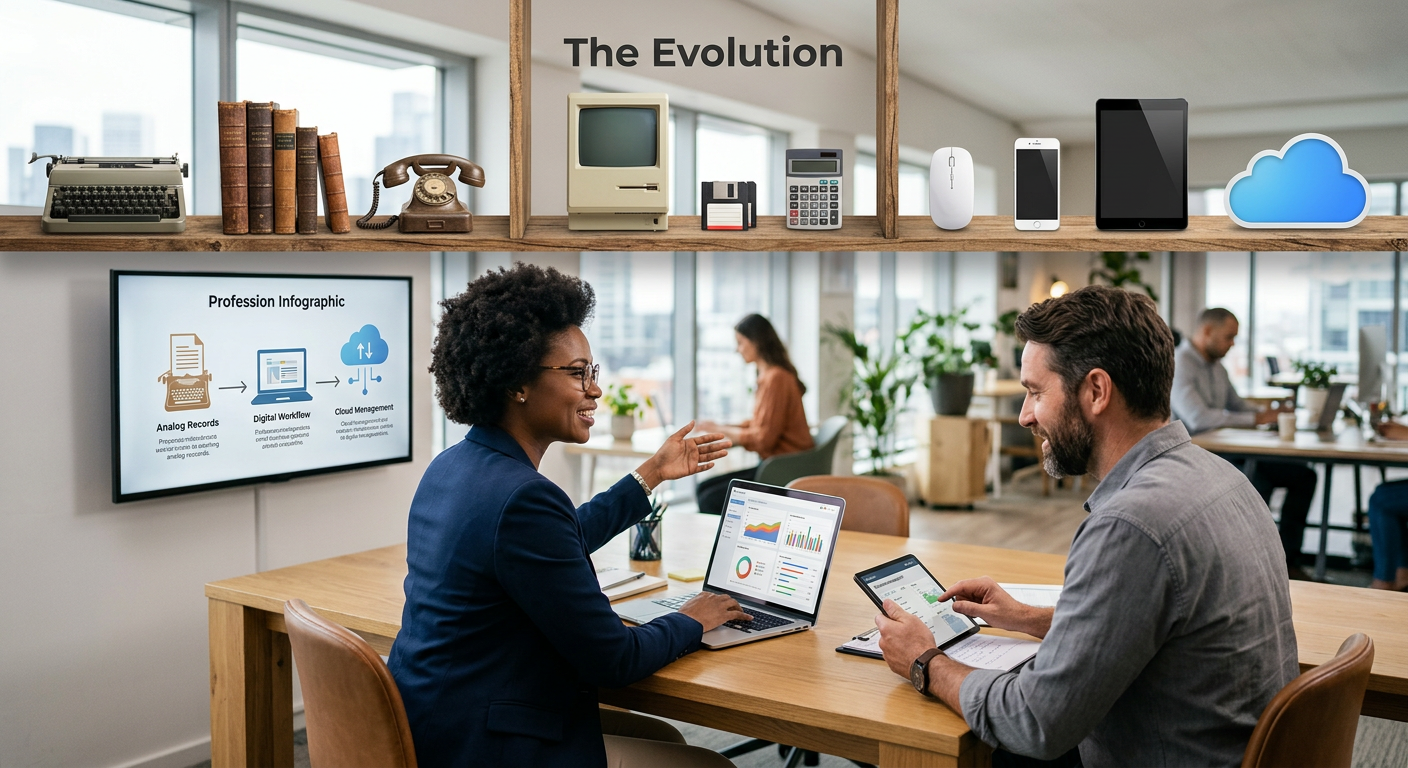
When we look at the current market data from the U.S. Small Business Administration, it is clear that digital transformation is no longer optional. Small businesses are now competing on a global scale, and the only way to keep up is to eliminate the administrative friction that slows down decision-making. We see this as the era of Empowered Entrepreneurship, where the right tools level the playing field against much larger corporations. The democratization of technology means that a three-person team can now project the same level of professionalism and efficiency as a Fortune 500 company.
Furthermore, the psychological impact of fragmented systems cannot be overstated. We have spoken with dozens of founders who describe a feeling of "digital fatigue" caused by switching between a dozen different logins. This cognitive load reduces creativity and leads to decision paralysis. By consolidating our tech stack, we aren't just saving money on subscriptions; we are protecting our most valuable resource: our mental clarity. We believe that a streamlined workflow is the ultimate competitive advantage in an increasingly complex economy.
- Integration of AI-driven analytics for real-time decision making
- Shift toward mobile-first management interfaces
- Increased focus on cybersecurity for small-scale operations
- Adoption of cloud-native financial reporting
- Real-time synchronization across global remote teams
- Predictive resource allocation to prevent project bottlenecks
Centralizing Operations for Operational Clarity
One of the biggest hurdles we face as business leaders is the "information silo" effect. When your project data lives in one place and your client history in another, you lose what we call Operational Clarity. We have found that centralizing these functions into a single platform like My Business Suite allows for a seamless transition between tasks. Imagine knowing exactly where a project stands the moment a client calls, without having to dig through three different browser tabs.

This centralization is particularly vital for founders like Maria, who need to maintain consistent branding and oversight as their teams grow. By having a single source of truth, we ensure that every team member is aligned with the company’s goals. It eliminates the "I didn't see that email" excuse and replaces it with a transparent dashboard of accountability. We are not just managing tasks; we are managing the pulse of the business. When everyone looks at the same data, the culture of the company shifts from reactive to proactive.
Consider the impact on internal communication. In a decentralized environment, a simple project update can trigger a cascade of Slack messages, emails, and frantic phone calls. In a centralized system, the update is the communication. We have seen teams reduce their internal meeting times by up to 25% simply by making project statuses visible to everyone in real-time. This is the essence of Operational Clarity: knowing what is happening, why it is happening, and who is responsible, all at a single glance. It allows us to lead with a sense of calm authority rather than constant urgency.
Breaking Down the Silos
To truly achieve this clarity, we must look at the intersection of different departments. For instance, when sales and project management are linked, the transition from a signed contract to a project kickoff becomes instantaneous. We no longer have to worry about the "hand-off" phase where critical details often fall through the cracks. We have seen that this level of continuity significantly boosts client confidence from day one. It proves that we are organized, professional, and ready to deliver on our promises.
Financial Health and the Task-to-Cash Flow
Cash flow remains the lifeblood of any venture, yet many owners still struggle to monitor their financial health effectively. In 2026, we advocate for a "Task-to-Cash Flow" mindset. This means every billable hour or project milestone should be directly linked to your invoicing system. According to recent reports from Reuters, businesses that automate their payment reminders see a 30% faster collection rate compared to those using manual processes.
For freelancers and consultants like David, this integration is a game-changer. Instead of spending Sunday nights reconciling bank statements, we can use automated tools to track expenses and send professional invoices the moment a project is marked complete. This level of financial integration provides a clear view of profitability, helping us decide when it is time to reinvest or when we need to tighten the belt. We believe that seeing your numbers in real-time is the only way to lead with confidence. It transforms the accounting department from a "look-back" function into a "look-forward" strategic partner.
Moreover, understanding our financial health goes beyond just knowing our bank balance. We need to understand our burn rate, our customer acquisition cost, and our lifetime value per client. When these metrics are integrated into our small business management platform, they become actionable insights. For example, if we notice that a specific service line has high revenue but low margins due to excessive labor hours, we can pivot our strategy before it impacts our bottom line. We have found that data-driven financial decisions are 50% more likely to result in long-term sustainability than those based on "gut feeling" alone.
The Benefits of Integrated Finance
When your finances are integrated with your project management, you gain insights that were previously hidden. We can see which types of projects are the most profitable and which clients consistently pay late. This data allows us to refine our client base and focus on high-value work that actually moves the needle for our growth. We also simplify our tax season significantly. By categorizing expenses and income in real-time, we avoid the year-end scramble that plagues so many small business owners. We believe that financial peace of mind is a prerequisite for creative innovation.
- Real-time profit and loss statements at the project level
- Automated expense tracking via mobile receipt scanning
- Seamless integration with major banking institutions for reconciliation
- Customizable financial alerts for budget overruns
Client-Centric Efficiency and Communication
In a world saturated with automated bots, personalized client interaction has become a premium commodity. We call this Client-Centric Efficiency. It is the art of using technology to handle the mundane so that we can focus on building real relationships. For Sarah, a small business owner juggling multiple roles, losing track of a follow-up can mean the difference between a loyal customer and a negative review.
By using a centralized CRM within your small business management strategy, we ensure that every interaction is logged and every promise is kept. We can set automated reminders for follow-ups, store specific client preferences, and provide a professional experience that rivals enterprise-level firms. We have seen that clients in 2026 value responsiveness above almost everything else. If we can answer a question in minutes because the data is at our fingertips, we win. This builds a level of trust that is difficult for competitors to break.
We also need to consider the "client journey" as a whole. From the first touchpoint on a website to the final delivery of a service, every interaction should feel cohesive. When we use a unified system, the client doesn't feel like they are being passed from department to department. They feel like they are being cared for by a single, dedicated team. We have found that this consistency leads to higher referral rates and a much stronger brand reputation. In the digital age, your reputation is your most valuable currency, and we protect it by being obsessively client-centric.
Personalization at Scale
The challenge has always been: how do we stay personal as we grow? The answer lies in smart data usage. By tracking client milestones—such as the anniversary of their first purchase or their specific industry challenges—we can reach out with relevant, thoughtful communication that doesn't feel like a generic marketing blast. We are using technology to enhance our humanity, not replace it. This is the core of our philosophy: tools should empower us to be more present for our clients, not more distant.
- Automated client onboarding workflows
- Centralized communication logs for team transparency
- Self-service portals for client project tracking
- Personalized marketing based on interaction history
- Integrated feedback loops to measure client satisfaction (NPS)
Scaling with Automation and Growth Catalysts
Scaling a business is often the most dangerous phase for an entrepreneur. Without the right systems, growth leads to chaos. We view modern management software as a Growth Catalyst—a foundation that supports expansion without requiring a proportional increase in administrative staff. As Maria’s startup grows, she needs a system that adapts to her, not the other way around. The goal is to build a "Task-to-Cash" engine that runs with minimal manual intervention.
Automation is the key here. We are talking about automating the repetitive stuff: lead capture, initial quotes, task assignments, and status updates. When we remove these manual hurdles, we free up our creative energy to focus on strategy and innovation. Data from Forbes suggests that small businesses leveraging automation are 2.5 times more likely to scale successfully within their first five years. We don't just want to work harder; we want to work smarter by building systems that can run while we sleep. This is how we move from being "self-employed" to being a true "business owner."
However, automation must be implemented with intention. We have seen businesses automate the wrong things, leading to a cold and robotic customer experience. We advocate for "Human-in-the-Loop" automation. This means using technology to do the heavy lifting of data entry and scheduling, while leaving the final decision-making and relationship-building to us. For example, an automated system can draft a proposal based on a client's needs, but we are the ones who review and send it with a personal note. This balance ensures efficiency without sacrificing the soul of the business.
The Role of Dashboards in Productivity
Visualizing performance is essential for any founder. Dashboards that show team productivity and project timelines allow us to spot bottlenecks before they become crises. We have found that when teams can see their own progress against company KPIs, engagement levels rise significantly. It turns management from a top-down directive into a collaborative effort toward a shared vision. When we provide our team with the tools to manage themselves, we foster a culture of ownership and pride.
A well-designed dashboard acts as a "single pane of glass" for the entire organization. It should highlight not just what is going wrong, but also what is going right. We use these insights to celebrate wins and recognize top performers, which is crucial for retaining talent in a competitive market. According to research from Gallup, employee engagement is a primary driver of profitability. By using data to support our people, we create a virtuous cycle of growth and high performance.
Conclusion: Future-Proofing Your Business
As we navigate the complexities of 2026, the goal of small business management remains clear: to create a sustainable, profitable, and enjoyable business. By focusing on operational clarity, financial integration, and client-centricity, we position ourselves to handle whatever the market throws our way. We have seen that the most successful entrepreneurs are those who treat their management system as a strategic asset rather than a digital filing cabinet. It is the foundation upon which all future success is built.
The landscape will continue to change. New technologies will emerge, and market demands will shift. However, the fundamentals of good business—clear communication, sound financial management, and excellent customer service—will always remain the same. By centralizing these fundamentals within a platform like My Business Suite, we give ourselves the flexibility to adapt without losing our core identity. We are building businesses that are not only resilient but also regenerative.
Whether you are a solo consultant or a growing startup team, the tools you choose today will define your trajectory for the next decade. We invite you to look at your current processes and ask: are they holding you back or propelling you forward? Are you spending your days putting out fires, or are you lighting the way for your industry? With the right approach, we can finally bridge the gap between our daily tasks and our long-term dreams. Let's build something remarkable together, with the clarity and confidence that only a unified system can provide.
Frequently Asked Questions
What is the most important aspect of small business management in 2026?In 2026, the most critical aspect is integration. Having a unified hub where your CRM, finances, and projects live together allows for real-time decision-making and prevents the data silos that slow down growth. This "Unified Business Hub" approach ensures that every decision is backed by comprehensive data rather than isolated snapshots.
How can automation help a small business scale?Automation acts as a growth catalyst by handling repetitive administrative tasks like invoicing, lead follow-ups, and data entry. This allows your team to focus on high-value strategic work and innovation without needing to hire more staff for basic operations, effectively lowering your overhead as you expand.
Is it expensive to implement a comprehensive management suite?Actually, it is often more cost-effective than paying for multiple separate subscriptions. Modern platforms like My Business Suite are designed to be affordable for startups while offering the scalability needed as the business expands. You save money on integration costs and reduce the time lost to "app-switching."
How does centralized communication improve team productivity?Centralization ensures that everyone has access to the same information at the same time. It reduces the time spent searching for emails or project updates, leading to fewer misunderstandings and faster project completion times. It also creates a transparent culture where accountability is built into the workflow.
What does "Task-to-Cash Flow" actually mean for my daily routine?It means that your operational tasks are directly linked to your financial outcomes. When you complete a task or reach a milestone, the system can automatically trigger an invoice or update your financial forecast. This ensures you are always aware of your profitability and reduces the gap between doing the work and getting paid.