What Is Invoicing in Accounting: Benefits for SMEs
Discover what is invoicing in accounting, how invoices affect cash flow, and practical 2026 tips to streamline billing for small businesses.
Neste artigo
- What Is Invoicing in Accounting: Definition
- Core Components of an Invoice
- What Is Invoicing in Accounting: Benefits for SMEs
- Practical Steps and Best Practices
- Common Mistakes and How to Avoid Them
- FAQ
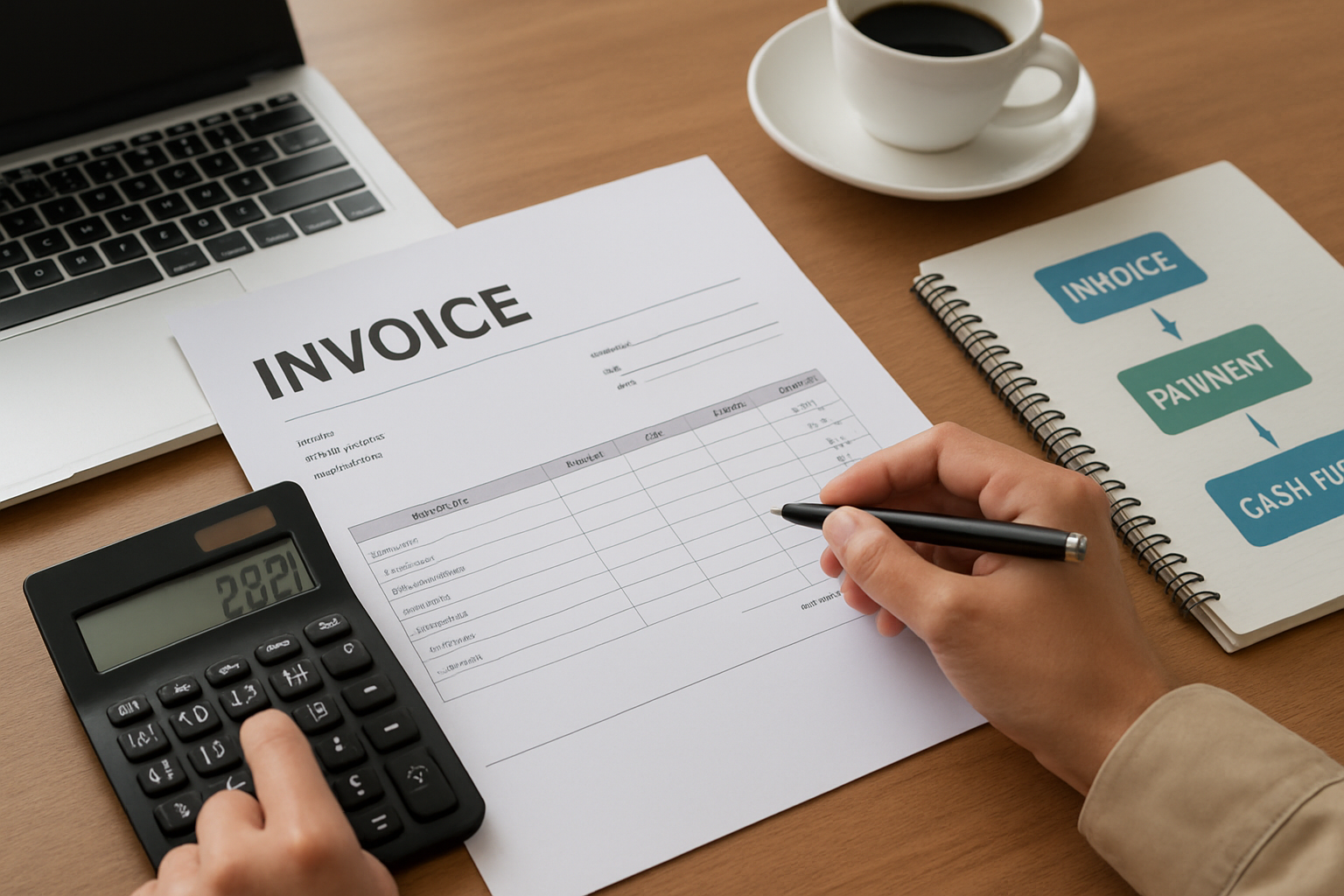
what is invoicing in accounting is the question many small business owners ask when they first start billing clients. We will explain the concept clearly, show how invoices move a business from task to cash flow, and share practical steps that make invoicing a predictable, professional part of our operations.
Beyond the textbook definition, we view invoices as customer touchpoints. Each invoice is an opportunity to reinforce brand professionalism, clarify scope, and nudge payment behavior. When we design invoices with the client in mind, we reduce friction and shorten the path from delivery to deposit.
What Is Invoicing in Accounting: Definition
At its simplest, an invoice is a formal request for payment that records a sale or service. We think of it as the bridge between work delivered and money received.
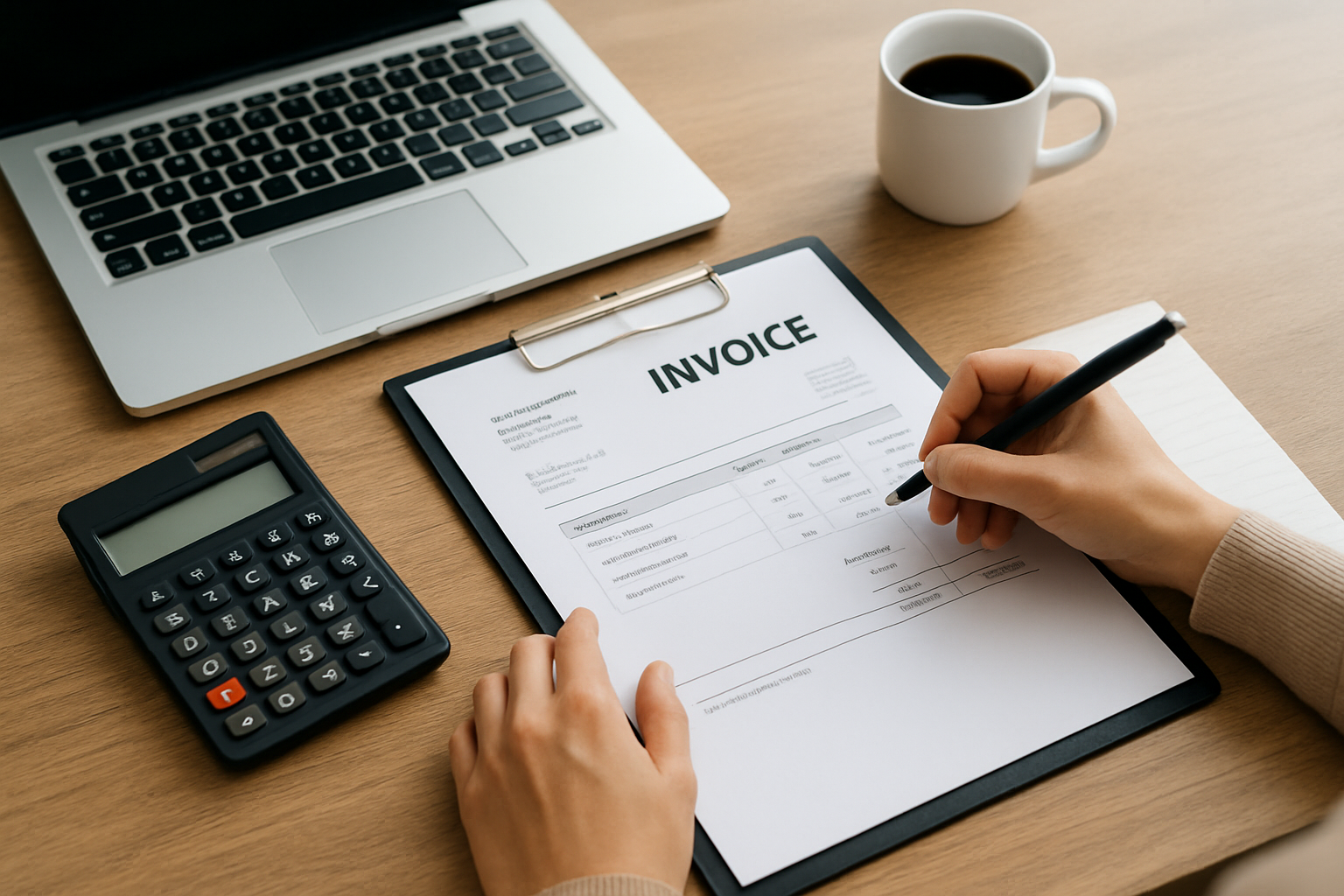
In accounting terms, an invoice is a source document: it documents revenue, triggers accounts receivable entries, and supports bookkeeping and tax records.
Why the wording matters
When we label a document "invoice," it tells our accounting system and our clients that an obligation exists. That obligation affects cash flow projections and tax reporting.
- Invoices create legal evidence of the transaction.
- They enable tracking of unpaid balances as accounts receivable.
- They feed payroll, tax, and financial reports when properly recorded.
Words on an invoice are not just semantics. For example, describing a charge as a "retainer" versus a "deposit" can change how we recognize revenue in our books and how clients interpret refundability. We prefer explicit short notes, one sentence, when a term might be unclear. Doing this up front saves time later.
what is invoicing in accounting , a quick checklist
To keep things simple, we use this checklist whenever we issue an invoice:
- Client name and contact details.
- Clear description of goods or services provided.
- Unit price, quantities, taxes, and total amount due.
- Invoice date, due date, and payment instructions.
Keeping invoices consistent reduces disputes and accelerates payment. We’ll show templates and examples later.
Practical tip: before sending an invoice, we run a five-second check: does the invoice answer who, what, when, how much, and how to pay? If any of those are fuzzy, a quick clarification to the client avoids a later back-and-forth that stalls payment.
Core Components of an Invoice
Understanding the anatomy of an invoice helps us both create and review billing documents faster. Each component maps to an accounting entry or a communication need.
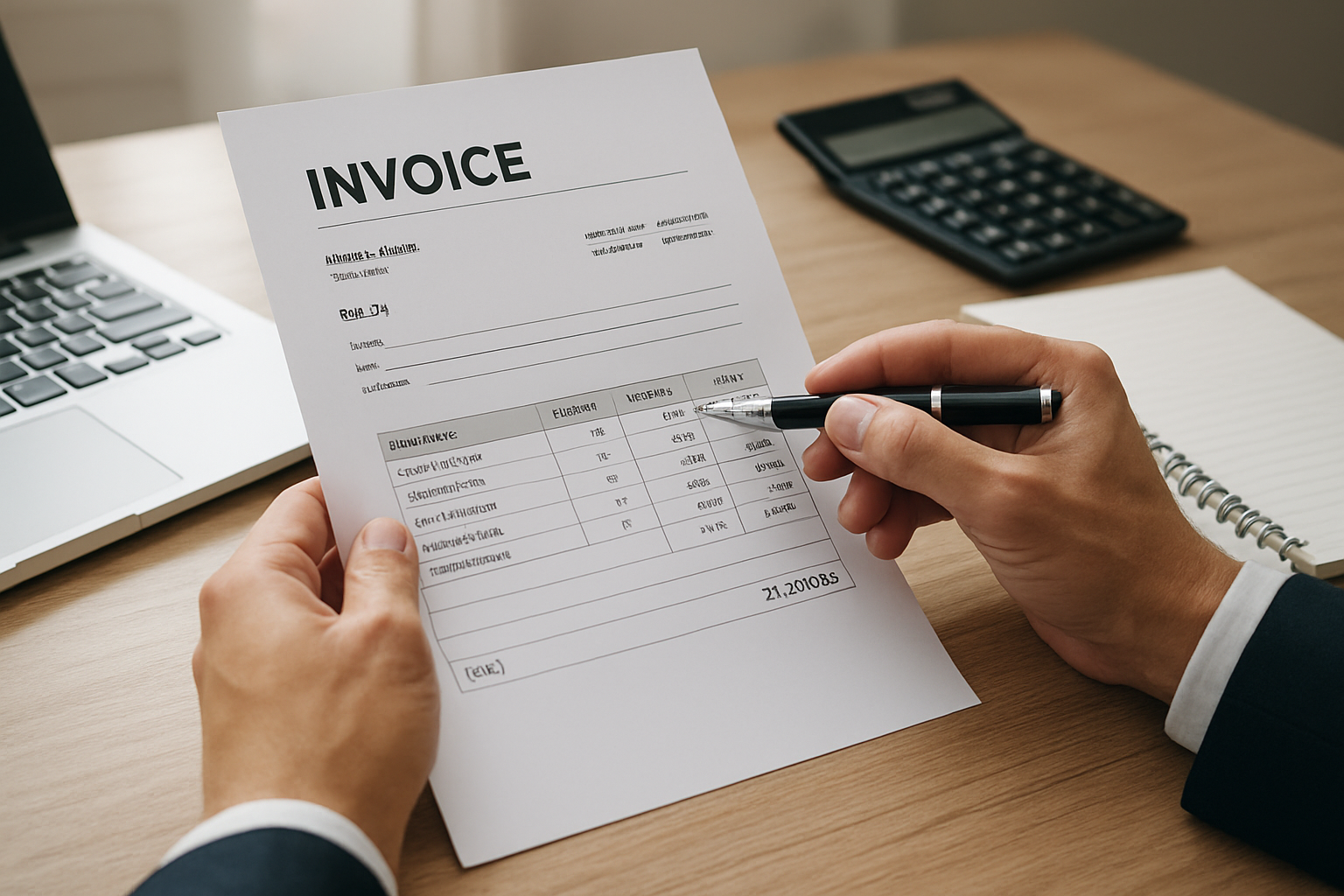
Below we break the parts down and explain the accounting implication of each.
what is invoicing in accounting: Header and identification
The top of the invoice identifies the issuer and the recipient. It also usually carries a unique invoice number, which is critical for audit trails.
- Invoice number: links to the ledger entry.
- Issue date: determines revenue recognition timing.
- Due date: sets the cash collection timeline.
We treat the header like the invoice's business card: clean logo, clear contact, and a single line that tells the client what this bill represents. If a client has an accounts payable portal, we add any required AP references in the header to speed processing.
Line items and totals
Each billed item is listed with a quantity, rate, and subtotal. Taxes and discounts appear below line items, followed by the grand total.
- Line items map to revenue accounts or cost codes.
- Taxes may be recorded separately to comply with sales tax reporting.
- Payment terms affect cash forecasting and days sales outstanding (DSO).
When we invoice for services that include both billable hours and expenses, we separate those line items visually. That way, clients see where charges come from and approvals are faster. We also add short supporting attachments, timesheets or receipts, when appropriate.
what is invoicing in accounting: Payment instructions and terms
Clear payment directions cut confusion. We include accepted methods, bank details, or links for online payments.
- Net 30, Net 15, and milestone payments are common terms.
- Late fees and early-payment discounts influence client behavior.
- Electronic payment links can shorten collection times.
We try to offer at least two payment options, one ACH and one card-based, to cover client preferences. Adding a one-line note about "How to pay quickly" improves on-time payment rates because it removes the guesswork clients sometimes face when different teams handle payment.
What Is Invoicing in Accounting: Benefits for SMEs
When small businesses adopt solid invoicing practices, the effects ripple across operations. We see improvements in cash flow, client relationships, and financial clarity.
Below we outline the most tangible benefits and link each to practical outcomes we can measure and improve.
Improved cash flow predictability
Invoices create a schedule of receivables we can forecast. When we know who owes what and when, we can fund payroll, inventory, and investments with more confidence.
- Regular invoicing reduces surprise shortfalls.
- Automated reminders and electronic payments speed collections.
- Structured terms, such as deposits or partial payments, protect margins on larger projects.
Example scenario: imagine we run a creative agency that takes on three projects per month. By switching to milestone billing with 30% deposit at kickoff and 40% at mid-project, we lower our exposure and avoid cash gaps that force last-minute borrowing. That small change keeps the team focused on delivery, not chasing payment.
Stronger client relationships and fewer disputes
Clear, professional invoices set expectations. We avoid confusion about scope, price, or deadlines by describing services and attaching deliverable references.
- Line-item clarity makes approvals faster for clients.
- Professional branding builds trust and repeat business.
- Including a purchase order number links our invoice to the client’s internal process.
We also think of the invoice as a communication point. A brief "thank you" or a short note summarizing next steps on the invoice can reinforce goodwill. Small touches like this make it easier to ask for and receive timely feedback and referrals.
Better accounting and tax compliance
Invoices are primary source documents for revenue recognition. We rely on them to prepare financial statements and to support filings with tax authorities.
- Accurate invoices reduce audit risk.
- They help categorize taxable and non-taxable items correctly.
- Combined with a consistent accounting system, they speed tax preparation and filing.
For guidance on record-keeping and tax responsibilities for small businesses in the United States, we consult the IRS small business guidance. In Brazil, small business owners can find practical guidance and templates at SEBRAE.
Practical compliance step: we retain digital copies of all invoices in a structured folder, by year and client, and cross-link them to our accounting entries. That way, when we or an accountant need to verify a number, the evidence is one click away.
Practical Steps and Best Practices for 2026
In 2026, efficiency and automation are no longer optional for growing small businesses. We recommend concrete steps that combine process discipline with technology to make invoicing a growth lever.
Here are repeatable practices we adopt and teach clients at My Business Suite.
Set consistent billing cycles
Whether we bill weekly, monthly, or by milestone, consistency reduces friction. Predictable cycles make it easier to report and forecast.
- Choose a billing cadence aligned with cash needs and client cash flow.
- Send invoices promptly after delivery or at agreed milestones.
- Automate recurring invoices for subscription or retainer work.
We track the outcomes of different cycles. For example, when we shift a set of clients from monthly to biweekly billing, we usually see a smoothing of cash inflows that helps with payroll planning. These are small experiments we run strategically.
Use clear, client-focused language
We avoid jargon. A good invoice reads like a short receipt and answers immediate questions.
- Show dates, descriptions, and unit costs clearly.
- Include a short note about the work delivered when helpful.
- Attach receipts or time reports for billable-hour projects.
A real-world trick we use: include a three-line summary of what the client should expect after payment, deliverables release, support window, or next scheduled check-in. This reduces follow-up emails and accelerates reconciliation on the client side.
Adopt digital invoicing and payments
Electronic invoices and pay links reduce manual work and errors. They also shorten payment cycles.
- Offer ACH, credit card, or integrated payment options.
- Enable automated reminders for overdue invoices.
- Use tools that create an audit trail and reconcile payments automatically.
We recommend integrating invoicing with payment processors and with the client database so that payment events update the client record automatically. That integration turns invoicing from an administrative chore into a reliable cash flow engine.
Small businesses can find implementation guidance and free templates at the U.S. Small Business Administration.
Record invoices promptly in accounting
Recording invoices as soon as we issue them keeps our ledgers accurate and our financial dashboards useful.
- Post invoices in the accounts receivable ledger on the invoice date.
- Reconcile payments to invoices daily or weekly.
- Use aging reports to prioritize collection efforts.
One practical report we run weekly is a prioritized aging list: invoices over 60 days, then 30–60, then under 30. We assign one person to lead the collection cadence for each bucket so nothing falls through the cracks.
How to handle disputed invoices
Disputes happen. Our approach is to acknowledge quickly, document the issue, and propose a path forward. That keeps relationships intact and reduces extended DSO.
- Respond to dispute notices within 24–48 hours.
- Offer interim credit memos or payment plans when appropriate.
- Capture the resolution in writing and adjust future invoices if needed.
When we negotiate, we keep one objective: recover as much value as possible without damaging the client relationship. Often a small concession and clear next steps save far more than prolonged conflict.
Integrate invoicing with CRM and project management
Linking invoices to client records and project milestones eliminates duplicate data entry and provides context to accounts receivable. We can see the status of deliverables at a glance and know why a payment is late.
- Sync client contact info to avoid billing to an old email.
- Attach project milestones to invoicing triggers.
- Use a unified dashboard to track invoice status and client communications.
My Business Suite centralizes these flows so invoicing sits inside the same hub where we manage customers, projects, and finances. That reduces errors and gives us one source of truth for decision-making.
Common Mistakes and How to Avoid Them
Avoidable errors cost time and money. We compile the most frequent pain points and show how a few simple rules fix them.
Missing or inconsistent invoice numbers
Skipping sequence or using duplicate numbers breaks audit trails. We always use a reliable numbering system.
- Use automatic numbering in billing software.
- Include client codes or year prefixes for clarity.
- Keep a backup log for manual issuance scenarios.
We also periodically audit sequences to ensure there are no gaps that signal unissued or lost invoices. That small housekeeping step prevents headaches during tax season.
Unclear payment terms and late collections
Vague terms invite late payment. We declare expectations early and enforce them professionally.
- State due dates and accepted payment methods on every invoice.
- Offer incentives for early payment or penalties for late payment where appropriate.
- Follow a standard reminder cadence: polite notice, firm notice, escalation.
We test gentle versus firm language in reminders and track response rates. Over time, a template emerges that matches our brand voice and works to improve on-time payment percentages.
Poor tracking of taxes and compliance
Sales tax and service taxation vary by jurisdiction. We track tax rules and apply the correct rates on each invoice.
- Maintain a tax code map by state and product/service category.
- Document tax-exempt statuses when applicable.
- Refer to authoritative sources for complex questions, such as the U.S. Census Bureau for industry classifications or official government services at gov.br.
When complexity increases—multiple states, nexus issues, product taxability—we consult a tax advisor. For many small firms, the cost of expert guidance is lower than the risk of misapplied tax and potential penalties.
FAQ
We wrap up with direct answers to the most pressing questions small business owners ask about invoicing.
How quickly should we invoice after delivering a service?We generally invoice immediately after delivery or at defined milestones. For ongoing services, a monthly invoice cycle is common. Prompt invoicing reduces days sales outstanding and strengthens cash flow.
What basic information must appear on an invoice?At minimum, our invoices include a unique number, issue date, due date, client details, description of goods or services, unit prices, totals, and payment instructions. Including tax IDs or purchase order references helps corporate clients process payments faster.
Can electronic invoicing replace paper invoices for tax purposes?Yes. Electronic invoices are accepted for accounting and tax records in the United States, provided they include the necessary details and are stored reliably. We keep backups and use software with secure records to satisfy auditors.
How can automation improve our invoicing efficiency?Automation reduces manual data entry, creates consistent templates, schedules recurring bills, and sends reminders. When paired with integrated payments, automation can shorten the cash conversion cycle dramatically.
What should we track to measure invoicing performance?Key metrics include days sales outstanding (DSO), percentage of invoices paid on time, average time to payment, and aging buckets of receivables. Monitoring these helps us spot trends and take corrective actions.
To make metrics actionable, we calculate DSO with a simple formula: DSO = (Accounts receivable ÷ Total credit sales) × Number of days. Running this monthly shows whether our collections are improving after process changes.
Hypothetical example: if our accounts receivable average $50,000 and our monthly credit sales are $150,000, then for a 30-day month DSO = (50,000 ÷ 150,000) × 30 = 10 days. Tracking that over time tells us whether new invoicing practices are working.
For broader business trends and data-driven context around invoicing and small business finance in 2026, we read reputable publications and reports regularly. For example, industry coverage can highlight macro shifts that affect payment behavior; see reporting by Reuters, business press like Exame, or national statistics agencies such as IBGE for data.
Finally, when we think about invoicing in accounting, we see more than a paperwork task. It is a strategic lever that connects service delivery, client experience, and cash management into a single, measurable system. My Business Suite helps small businesses unite those pieces in a single hub so that invoicing becomes predictable and contributes directly to growth and operational clarity.
If we had to summarize an action plan: standardize templates, automate where it removes busy work, measure results, and iterate. Those four habits turn invoicing into a reliable growth engine rather than a monthly scramble.